
Taxes

close-up-view-on-a-new-semiconductor-microchip-in-gloved-han-385285420-stockpack-adobestock
Close-up view on a new semiconductor microchip in gloved hand of computer scientist. Modern technology and hardware development
Image Credit: vladdeep - Adobe Stock

Beware, Broad Semiconductor Tariffs Would Make Everything More Expensive

The Trump administration has consistently implemented (and recently lowered) Section 232 tariffs on industries critical to America's economic and national security, including aluminum and steel. But as it considers similar action on semiconductors, we face a fundamentally different challenge. Read More ›
SocialSecurityAdministrationSTATMeetingVisit-7302
Public Domain image from the Comptroller of Maryland Flickr: https://flickr.com/photos/mdcomptroller/

What Replaces Social Security?
The Social Security system might have been a good idea in 1936, when seniors faced the collapse of asset values in the Great Depression — including the devaluation of their bank savings in 1933 — while their adult children were also out of work and struggling to feed their own children. It might have been a good idea in 1950, when the ratio of payers to recipients was 16.5:1, and the tax rate had climbed to 3.0% combined. But it is definitely not a good idea in 2026, or for the foreseeable next fifty years. Read More ›
money-american-one-hundred-dollar-bill-on-the-grate-of-the-s-414622708-stockpack-adobestock
Money. American one hundred dollar bill on the grate of the storm drain.
Image Credit: Mikhail - Adobe Stock

Seattle’s Transformation Spawns a Long List of Problems

My wife and I returned to Seattle in early 1993 after nearly 23 years on the East Coast. We were delighted to come home. Our fair city was booming, with the qualities we always loved about Seattle still intact. Over the past three decades, however, we have witnessed a steady erosion in the livability of both our city and our state. Today, Seattle bears little resemblance to its former self, and Washington is becoming a less attractive place to live or work. Read More ›
20260111FreeIranDemonstrationWashingtonDCUSA01156
Image by Ted Eytan at Wikimedia Commons: https://commons.wikimedia.org/wiki/File:2026.01.11_Free_Iran_Demonstration,_Washington,_DC_USA_01156_07428_(55036215113).jpg

How to Save Iran 1-2-3

Iran has been experiencing quite a bit of disorder recently. The reasons for this are "complicated" — Iran has many foreign enemies, and the situation smells like an attempted "color revolution" — but the government of Iran has also been making quite a mess of things all by itself, recently and for a long time now. It's no surprise that even the most patriotic Iranians might be very dissatisfied today. Read More ›
group-of-young-african-kids-walking-with-buckets-and-jerryca-224079857-stockpack-adobestock
Group of young African kids walking with buckets and jerrycans on their head as they prepare to bring clean water back to their village.
Image Credit: Logan Venture - Adobe Stock

How Africa Can Get Rich

Africa too can get rich, as once-poor Asian countries have, but not if governments keep doing what they've been doing. Basically, they will have to throw off the stifling tax systems inherited from their prior colonial governments. There are other things you can add to that. But, I think we can say, with confidence, that if things stay as they are, nothing is possible. Read More ›
fifty-hundred-dollar-banknote-closeup-of-50-usd-bill-america-424601806-stockpack-adobestock
Fifty Hundred Dollar Banknote. Closeup of 50 USD bill. American Money. USA Currency, Cash Money as Background
Image Credit: Rabanser - Adobe Stock

How to Avoid Sovereign Default

Governments sometimes get themselves into trouble with too much debt. Early economist Adam Smith devoted the last chapter of his famous Wealth of Nations (1776) to the topic of sovereign default. “The progress of the enormous debts which at present oppress, and will in the long-run probably ruin, all the great nations of Europe, has been pretty uniform,” Smith wrote. “The practice of funding [financing deficits with debt] has gradually enfeebled every state which has adopted it.” Read More ›
C43456-15
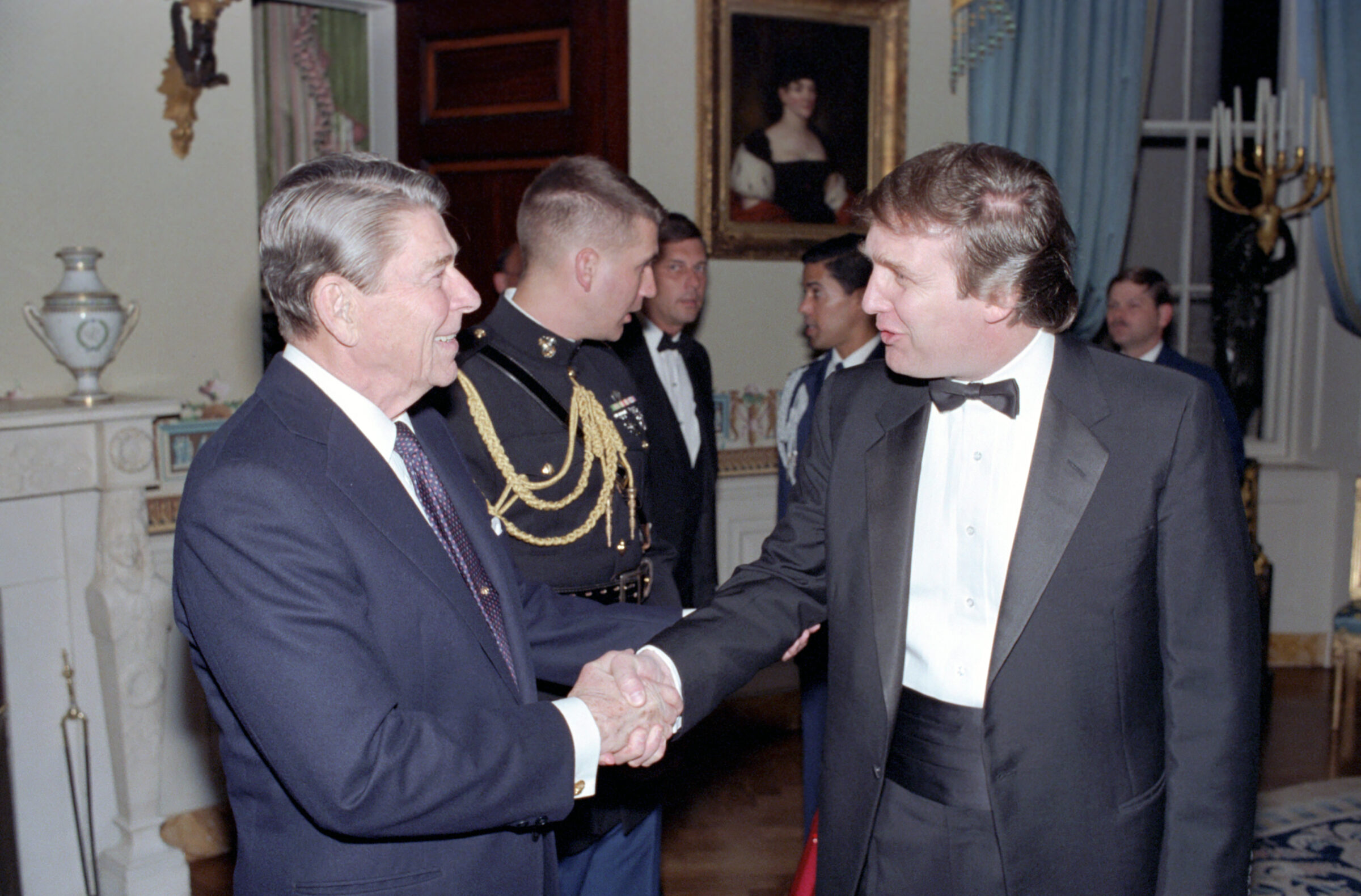
11/3/1987 President Reagan shaking hands with Donald Trump at a reception for members of the "Friends of Art and Preservation in Embassies" Foundation in the Blue Room
Public Domain image from Wikimedia Commons: https://commons.wikimedia.org/wiki/File:President_Ronald_Reagan_shaking_hands_with_Donald_Trump.jpg

George Gilder: Trump is Reagan’s True Heir

We are confirmed free traders. Trade flows are information. In our information theory of the economy, nothing is more important than letting information flow undistorted. Still, we are not especially worried about Trump’s tariff threats because on net, he is doing the economy far more good than bad. The big economics lesson of the past 40 years has been the decisiveness of tax policy. Read More ›
545539719548a57687d37k
Image from Gov. Bob Ferguson's Flickr account: https://www.flickr.com/photos/wastategov/54553971954/

Gov. Ferguson Strips Away Washington’s Appeal with Slate of Tax Increases
Gov. Bob Ferguson recently signed into law the largest tax increase in state history. It included a 6-cent per gallon increase in the gas tax. Washington already had the third-highest gas price in the country, exceeded only by California and Hawaii. Next, Ferguson approved a rent control package that limits rent increases. Any student of economics knows that if you restrict a business’s ability to make a profit, the business will stop investing. Read More ›
P20250402AM-0738
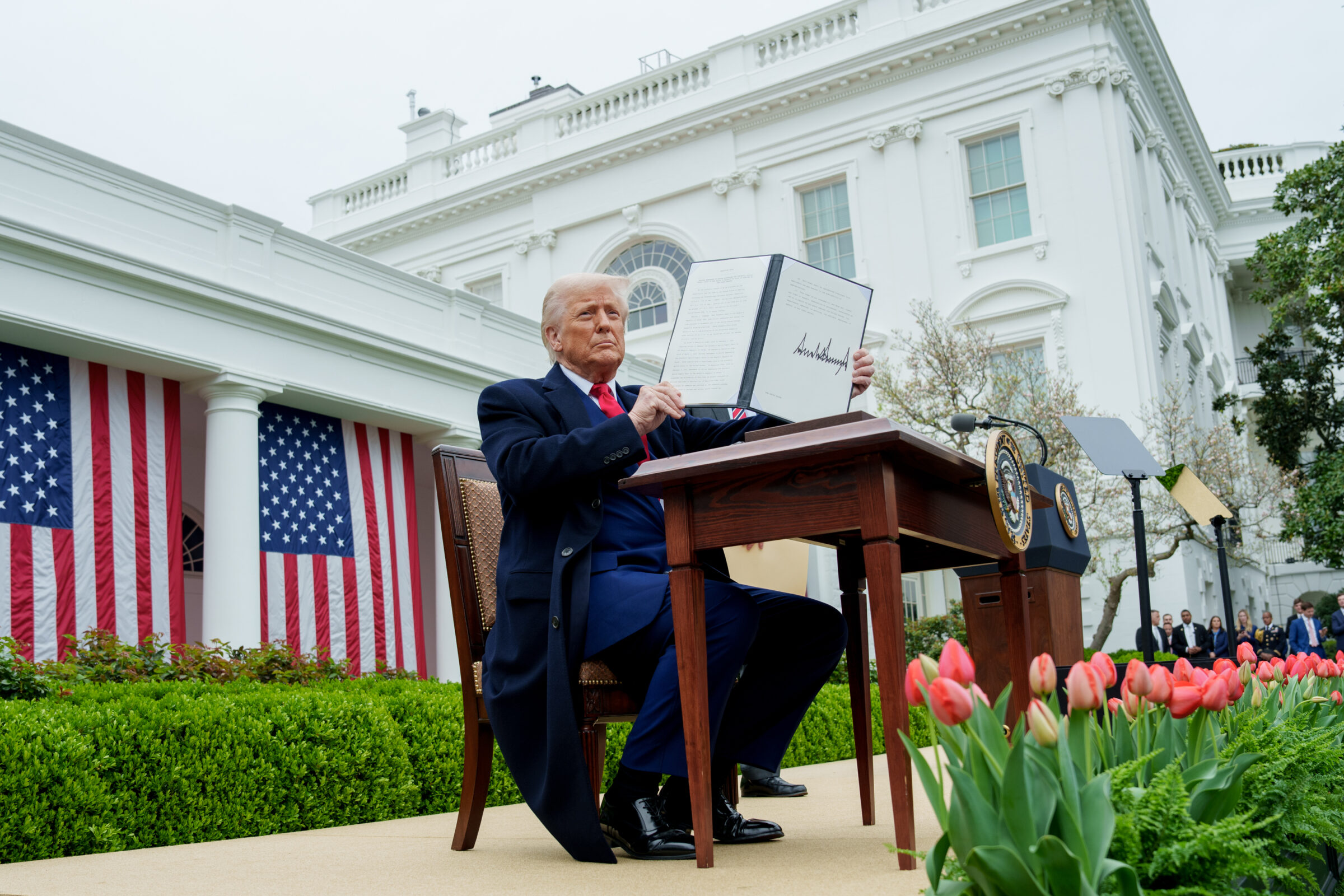
President Donald J. Trump signs an Executive Order on on the Administration’s tariff plans at a “Make America Healthy Again” event, Wednesday, April 2, 2025, in the White House Rose Gardent. (Official White House Photo by Abe McNatt)
Image from the White House at Wikimedia Commons: https://commons.wikimedia.org/wiki/File:The_White_House_-_54426179977.jpg

Tariffs Done Wrong

Economic Nationalism, done right, could work very well for the United States in coming decades. The most glorious period for US business, before 1913, was a time of high tariffs and controlled immigration. But, it was also a time when there was no Income Tax; and, in this pre-Federal Reserve era, the money was fixed to gold. The result was very good. The United States, at first a promising “emerging market,” ended up a global superpower. Read More ›
airplane-flying-over-colorful-cargo-containers-stockpack-ado-1069008695-stockpack-adobe_stock
Airplane Flying Over Colorful Cargo Containers
Image Credit: evening_tao - Adobe Stock

A New Era of Economic Nationalism

The United States was founded on Free Trade. And, high tariffs. Domestically, the United States had exceptional economic policy. There were hardly any taxes, and the currency was reliably fixed to gold. Trade was Free between States. With what I've called "The Magic Formula" (Low Taxes and Stable Money), the US got richer — even with high tariffs with the rest of the world. Read More ›