
Wealth & Poverty Review Memorial Day and the Meaning of American Reconciliation
Originally published at The American SpectatorIf the last few generations of Americans understood the origin and meaning of Memorial Day, we might have avoided the trauma of division and corruption that saps Americans from living in peace, trust, and joy. Memorial Day was founded on the biblical ideals of forgiveness and reconciliation shortly after America’s most divisive and bloody conflict, the Civil War, which extended from 1861 to 1865. That conflict cost at least 620,000 men, more casualties than all of America’s other wars combined — the two World Wars, the Korean and Vietnamese Wars and the Middle East wars.
The United States was so mercilessly divided at the time of the Civil War that many thought reconciliation impossible. And yet, it began with humble and virtuous actions from the vanquished South, not the victorious North.
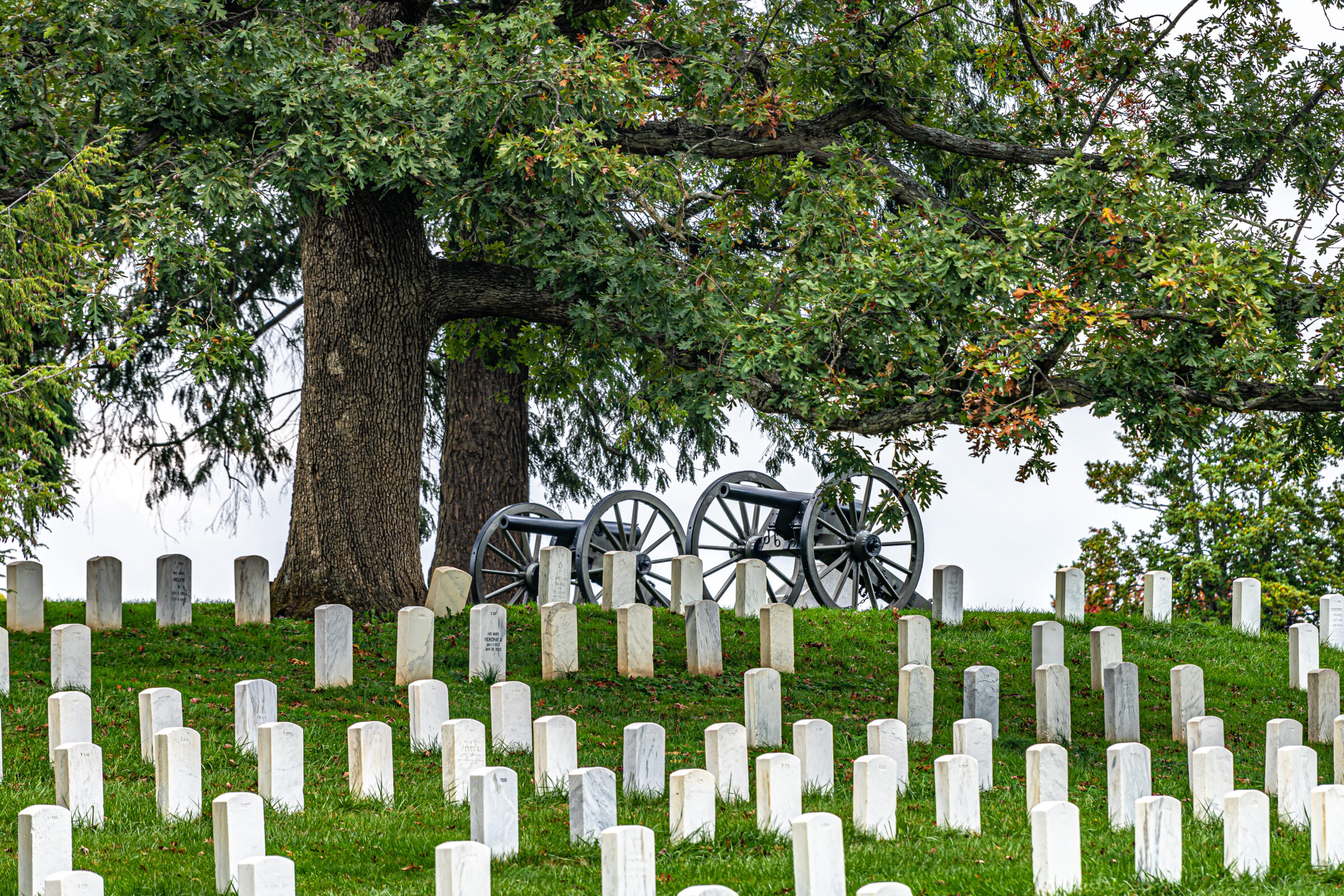
Memorial Day was originally called Decoration Day and was established to honor the dead and buried from the Civil War. The holiday’s origin dates back to April 25, 1866, when a former chaplain in the Confederate Army accompanied a group of women from Columbus, Mississippi to Friendship Cemetery — the burial ground for about 1,600 men who died in the Battle of Shiloh — for the purpose of honoring the dead with decorations of flowers. At that time, Columbus, like the rest of the South, was occupied by Union Army forces, and some townspeople were fearful of creating new animosity, if the decorations would favor Confederate over Union graves.
The prayerful Columbus women had no such intention despite having heard about the Union’s cavalier mass burial treatment of Confederate army fatalities on Northern battlefields. Their equal decoration of the graves of both sides became a catalyst for a national reconciliation movement. The New York Herald editorialized: “The women of Columbus, Mississippi, have shown themselves impartial in their offerings to the memory of the dead … strew[ing] flowers alike on the graves of the Confederate and of the Union soldiers.”
A second claimant for originating Decoration Day took place on Belle Isle located in the James River in Richmond, Virginia, the capital of the Confederacy. On May 30, 1866, women placed bouquets of flowers on the graves of Union soldiers who were victims of the Confederate prisoner of war camp located there.
Despite the war’s staggering death toll and Confederates having inflicted far more casualties on the North than the Union did to the South, Abraham Lincoln expressed no blame or bitterness toward the Confederacy. Rather, in his Second Inaugural Address he held both sides — the North and the South — accountable for this most costly war. Memorial Day might be our most important civic holiday today because it reminds us that the country paid more in deaths to reunite the nation and correct the offense of slavery than it paid for all the other causes for which the nation fought in its ensuing history.
While Memorial Day, which became the holiday name of Decoration Day, came to be known as a day of commemoration to honor those lost while fighting in the Civil War, its observance was not at all consistent for many years. And when the United States became embroiled in World War I and World War II, the holiday evolved to commemorate American miliary personnel who died in subsequent wars.
Memorial Day became a federally observed Monday holiday after Congress passed the Uniform Monday Holiday Act in 1968, a law designed to create more three-day weekends for federal employees. The act, which took effect in 1971, moved Memorial Day from its traditional May 30 observance to the last Monday in May. It also shifted Washington’s Birthday and Columbus Day to Mondays, helping establish the modern holiday-weekend calendar Americans know today. Although many Americans began referring to Washington’s Birthday as “Presidents Day,” Congress never officially renamed the holiday or formally combined it with Lincoln’s Birthday. Years later, Martin Luther King Jr. Day would likewise be established as a Monday federal holiday, observed on the third Monday in January.
Americans were unique in sacrificing their treasure and lives to found the first country in history establishing that all people have natural rights that come from God rather than from rulers or government. The Declaration of Independence affirmed the equality of all people and that they were endowed with unalienable rights to life, liberty, and the pursuit of happiness. And just because it took 200 years for that entire vision to be fully realized, it does not diminish the founding based on those ideals. In fact, Americans should be both grateful and proud of the 5,000-year miracle of their country being the first in human history to establish that it was the people and not the State who had sovereign and unalienable rights — the Bill of Rights.
Thus, when Americans sacrificed their lives in military service, we should remember that they died not only to defend the United States, but also to uphold the natural rights and moral values associated with the nation’s founding, inspiring people around the world.
There were times and places in human history when there were nation states of cultural achievement, virtue, and efflorescence, such as in Periclean Athens, in the Florence of the Medicis, and in England of Elizabeth and Shakespeare. But none were founded the way America was — that is by a collection of the nation’s most learned statesmen, well-versed in classics of law and political philosophy.
But perhaps more importantly, it was the Bible more than any other source, that the founders cited between 1770s and the 1790s — the period that gave birth to the Declaration (1776), the Constitution (1787), the Bill of Rights (1789) and the Constitution’s 13th state ratification (1790). The Constitution provided a charter for an unprecedented arrangement of governmental institutions designed to mitigate corruption and abuse of power while also protecting the citizens’ unalienable God-given rights. The Bill of Rights, an integral part of the Constitution, enabled people living in America to rise to levels closer to the divine image in which all were created than they would have under any government previously conceived.
When the Puritans left England in 1630 as part of the Great Migration to New England, under the charter of the Massachusetts Bay Company (granted in 1629 by King Charles I), they could not have foreseen what American independence or future constitutional government would eventually look like. Their leader, John Winthrop — who would become the colony’s first governor — articulated a vision rooted in Scripture, drawing on Matthew 5:14-16, which called them to serve as a moral example to the world.
During the voyage aboard the flagship Arbella (named in honor of Lady Arbella Johnson, a member of the expedition’s elite group), Winthrop delivered his sermon “A Model of Christian Charity,” in which he set out that purpose. He famously warned that their community would be held to a higher standard, declaring that they would be “as a city upon a hill,” with the eyes of all people upon them.
The governing guidelines for that “City” would in part turn out to be the U.S. Constitution, which became one of America’s most important exports to the world. Writing about the benefits of the Constitution, Thomas Jefferson stated, “We feel that we are acting under obligations not confined to the limits of our own society. It is impossible not to be sensible that we are acting for all mankind.” In only two centuries since that time, most every nation has come to accept the need and value of having a constitution, regardless of differences in culture and history. Many sought to learn from the United States because of the captivating ideals at the center of the world’s longest surviving constitution.
In sum, Memorial Day means more than remembering and honoring those who died in military service to the country. It means connecting with a heritage that began with a courageous and faithful group of founders, who risked everything for the birth of freedom and the establishment of America as a “city on a hill.” And it is particularly appropriate in these times to remember that it was the spirit of forgiveness and reconciliation that renewed America after the divisive period of the Civil War when the nation suffered its greatest wartime destruction and loss of life.
Memorial Day, rightly understood, provides inspiration and depth to rediscover and restore what made our country great and will make America great again.