

Wealth & Poverty Review Sorry AOC, We’re All Billionaires Now (and Billionaires are Trillionaries)
Originally published at Gale Pooley's SubstackNew York Congresswoman Alexandria Ocasio-Cortez (D-N.Y.) recently said “You can’t earn a billion dollars. You just can’t earn that.” Actually we’re all billionaires now. Let me explain.
If someone spends a billion dollars to create a product that a billion people can use at the same time, what does it make them? Capitalism creates millions of products that we can all enjoy, many at the same time. Why? Because they are created with knowledge. As the Nobel prize winning economist Paul Romer points out, that unlike a Snickers bar, knowledge is “non-rivalrous”—it can be consumed by everyone at the same time.
Atoms divide when shared. Knowledge multiplies
The economics of knowledge is much different than the economics of atoms. One person using an idea does not diminish another person’s ability to use it. In fact, the opposite is often true: ideas grow more valuable the more widely they spread. A smartphone app, a lifesaving drug formula, a search engine, or a digital book can pour outward to billions at near-zero marginal cost. The initial creation may require enormous investment, but once discovered, the value can cascade across humanity simultaneously. This is the hidden miracle of capitalism and the truth that wealth is knowledge: it transforms expensive discoveries into mass abundance.
Development Costs and Unit Costs
In economics we think about the cost to create a new product and then the cost to manufacture each additional unit. Many products have high development costs but low per unit costs when manufactured at scale. The unit costs on some products can actually reach zero.
More People Makes Us All Richer
The reason we can enjoy products with such high development costs and low unit costs is because there are so many of us. Creators of these high development cost products can recoup these costs over millions, if not billions of customers. Adam Smith understood this back in 1776. If you want to get rich, have lots of potential customers. Large markets also allow people to develop their skills and specialize in such things as drug and software development. The greater the population, and the more we specialize, the more variety and lower costs we enjoy in the marketplace.
iPhone Billionaires
It’s estimated that Apple spent $150 million over three years to develop the first iPhone released in 2007. It sold for $499. How could it be sold so cheap if it cost so much?
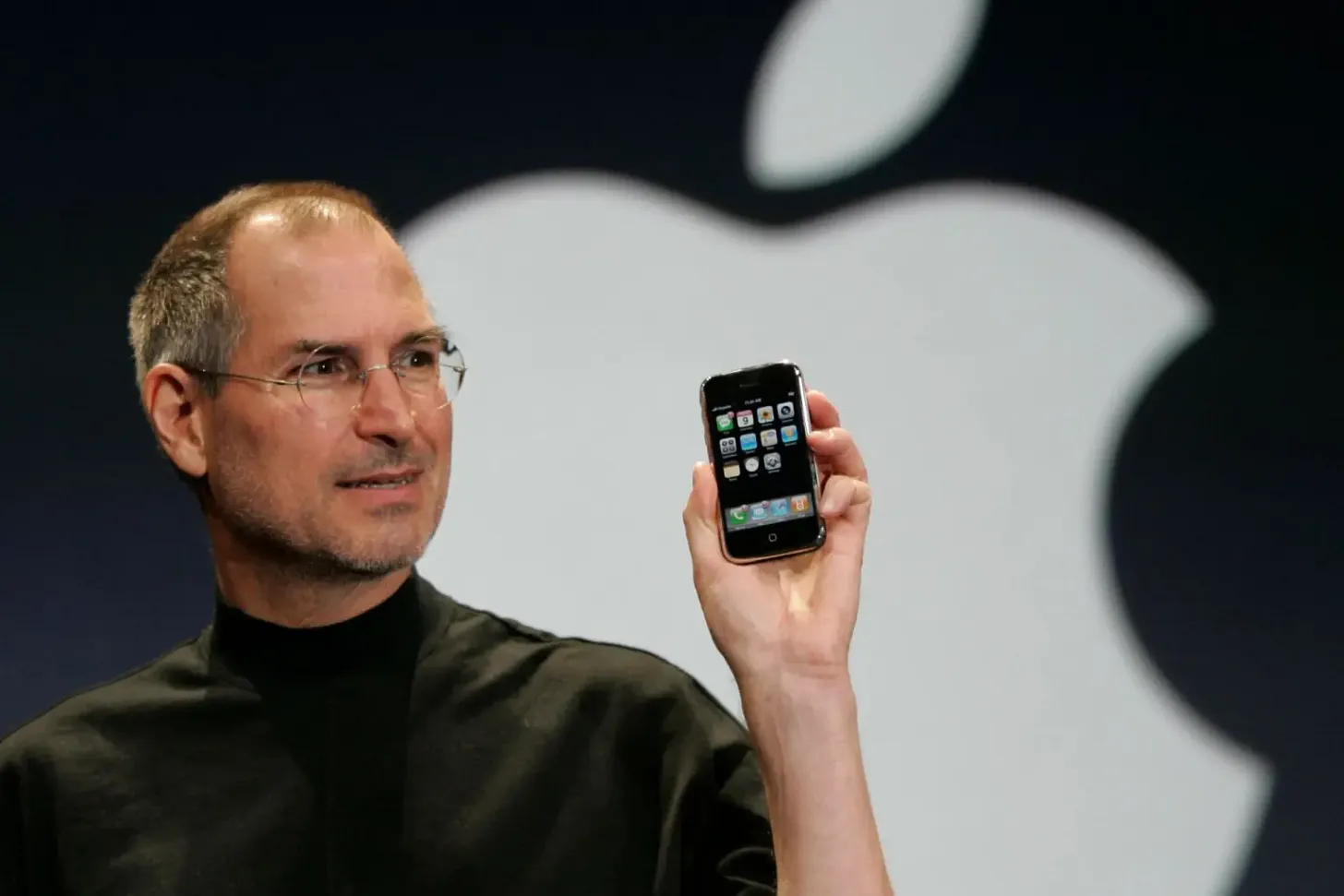
Apple has sold over 3 billion iPhones and has over 1.5 billion active users. In 2009 Apple spent $1.33 billion on research and development and in 2024 they will spend over $32 billion. They have spent $208 billion on developing new products over the last 16 years. About half of Apple’s revenues come from iPhone sales. Assuming half of their research and development investment has gone into the iPhone we are enjoying a product that cost over $100 billion for around $30 a month, or less than an hour for the average worker.
Medicine Billionaires
The cost to develop a new drug is estimated to range from $1.3 billion to $2.6 billion. The process typically spans 10-15 years, requiring immense capital investments during that period. Only a small fraction of compounds (approximately 5 out of 5,000) that enter preclinical testing reach human trials, and only one may receive final approval. Once a drug is approved the marginal cost can be very low, maybe under a dollar.
If it costs one billion dollars to develop a new drug but each new unit of the pill only costs a dollar to manufacture, how much should you charge the customer for it? The answer depends on the size of the market. If the market is one thousand people, your costs are going to be one billion plus $1,000. You would have to sell each pill for one million dollars plus $1 to break even. If your market was a million people, the breakeven price would drop to $1,001. If your market was a billion potential customers, the price per pill drops to $2.00. This is why new drugs are typically developed for widespread medical conditions. The fixed costs must be spread across a sufficiently extensive market. This is pretty amazing when you think about it. You get a pill that required a billion dollars to develop for $2.00 if a billion other people have the same problem.
Book Billionaires
Google Books provides free access to more than 10 million titles for users to read and download. For $35 you can get a tablet (with camera) to enjoy all this knowledge.
AI Model Billionaires
Global AI investment between 2013 and 2014 has been over $1.6 trillion in total corporate investment spent on AI. In 2025 alone, over $200 billion was invested and this is projected to soar even higher in 2026, driven by massive data center build-outs.
Access for basic ChatGPT and Gemini are free. Monthly access to premium AI models, such as ChatGPT Plus, Claude Pro and Google AI Pro generally costs $20 per month. Platforms like Aymo, Bluehost, Perplexity, and many others provide access to multiple premium models for $5-$20 a month.
Music and Movies
Apple Music plans include over 100 million songs and costs $10.99 a month for individuals, or $5.99 a month if you’re a student. Families of up to 6 people can enjoy the service of $16.99 a month. Amazon Prime Video offers over 18,000 titles for $8.99 a month or go ad-free for $13.98.
Capitalism gives us access to 100 million songs and 18,000 movies for 83 cents a day.
Internet Trillionaires
GSMA reports the total investment in global mobile internet connectivity infrastructure at $1.22 trillion over the past five years. This includes spending on end-user devices, with mobile network operators being the largest single group of investors, contributing 45 percent of the total. The remaining investment comes from various sources like tower companies, other network operators, and enterprise spend on devices.
How much does it cost to enjoy in this trillion-dollar asset? About $2 a day.
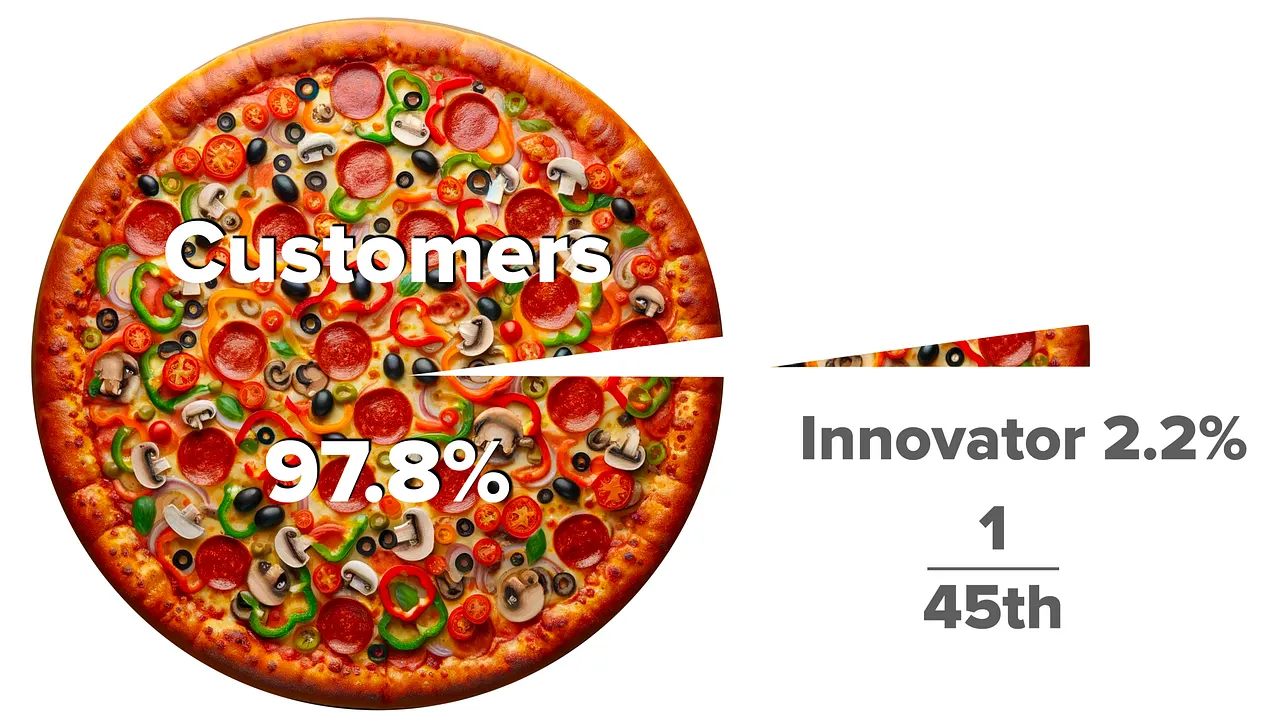
Capitalist Billionaires Give Customers 97.8 Percent of the Value Created
Under capitalism the only way wealth can grow is if entrepreneurs create it in the form of new products and services. Becoming a billionaire is a byproduct of how successful a person is at creating and producing.
Yale University economist and co-winner of the 2018 Nobel Prize in Economics, William Nordhaus, estimated that producers capture around 2.2 percent of the benefits of technological advances. That would leave 97.8 percent of those benefits to the consumers of those products. As George Mason University economist Don Boudreaux noted, entrepreneurs make a pie and divide it into 45 equal slices and then give 44 of those slices to their consumers. That’s quite the benefit for consumers who have done none of the work or taken any of the risk to create these products.
Envy is the Enemy of Wealth Creation
AOC’s envy has blinded her to these economic truths. Telling America’s creators they don’t deserve to use their wealth to make the rest of us billionaires will return us to the Dark Ages of poverty and despair. Bernie really wants to expropriate capital from Elon and other innovators and give it to his fellow politicians and bureaucrats to lavish it on their friends and supporters. Once this capital is seized, however, entrepreneurs will be much less motivated to create any more. Ask all of the entrepreneurs that lived in the former Soviet Union, and those in China under Mao, how 100 percent taxation disincentivized them to ever create and take any risks.
A trillion is a million times a million. We haven’t just crossed into the age of millionaires or billionaires—we’ve entered the era of trillionaires. Not in our bank accounts, but in our daily access to tools, knowledge, and global infrastructure that was once unimaginable.
We’re all trillionaires now, especially AOC.