

Wealth & Poverty Review iPhones Cost 22.9 Hours Less
Originally published at Gale Pooley's SubstackSteve Jobs unveiled the first iPhone on January 9, 2007. The 4GB model sold for $499. At the time, limited-service restaurant workers earned an average of $9.16 per hour, making the time price of the iPhone 54.5 hours.
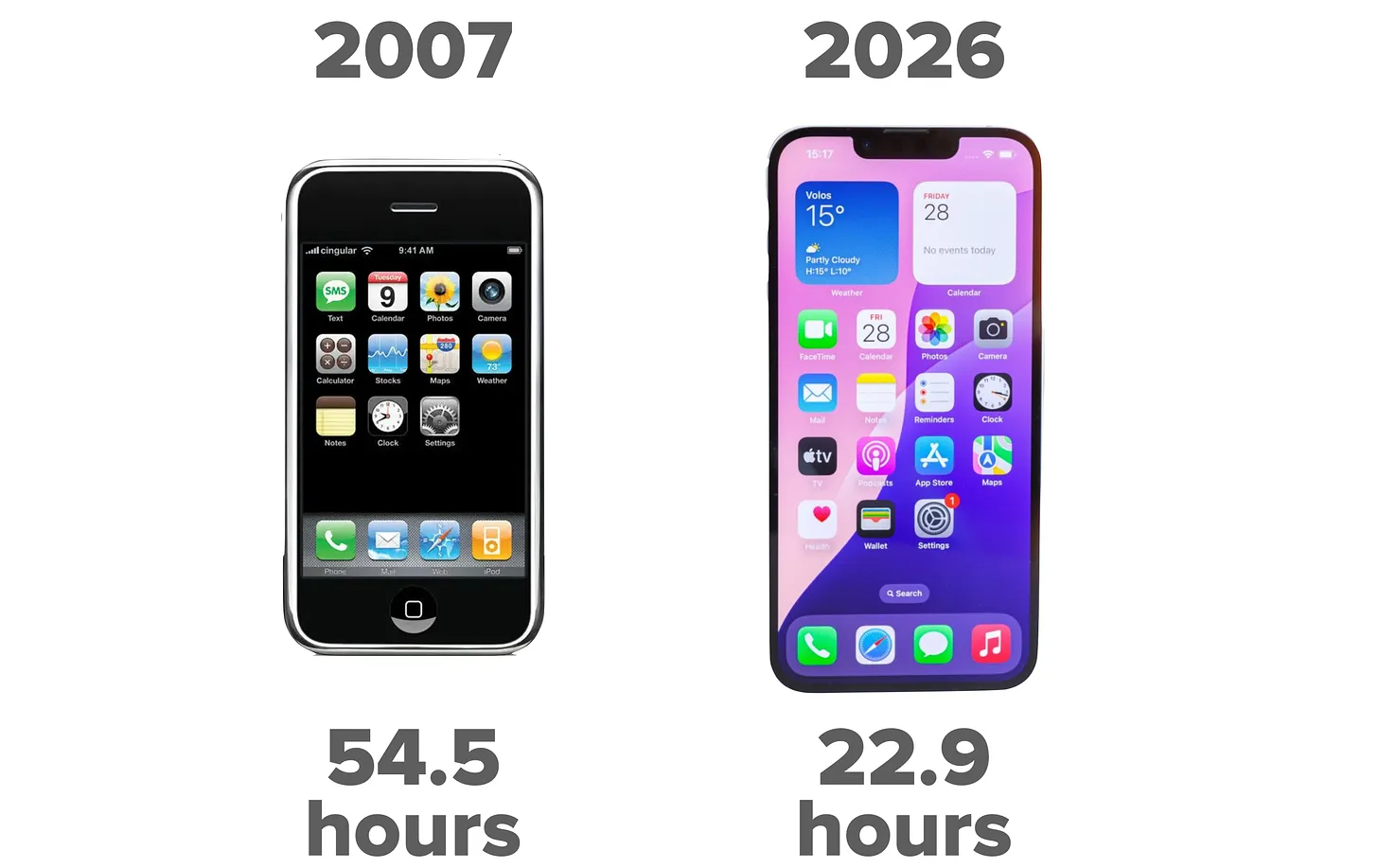
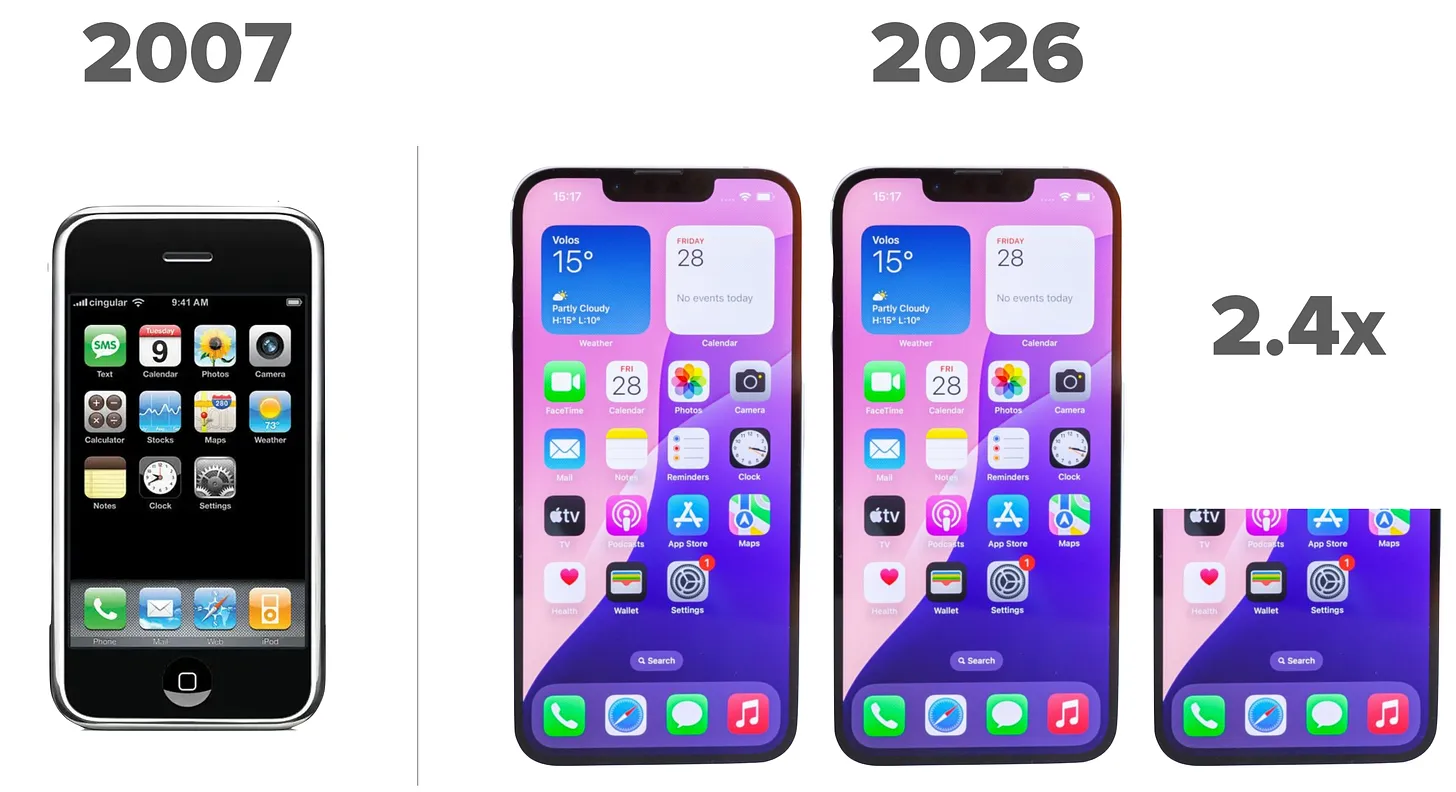
Fast forward to today: the iPhone 173 is priced at $599, while today’s limited-service restaurant workers are earning $18.95 per hour. That brings the time price down to 31.6 hours—a reduction of 22.9 hours. Today you get 2.4 iPhone 17es for the same time price of one 2007 model.
The real question is: How much more are you getting for 22.9 hours less work? Today’s iPhone offers vastly superior memory, speed, screen quality, and functionality—not to mention access to over two million apps in the App Store.
To measure the difference in value, I asked friends how many original iPhones it would take to trade for their current iPhone 17—ignoring collector value. No one was willing to make the trade at any number. That suggests the iPhone 17 isn’t just better—it’s infinitely better.
Since the iPhone launched in 2007, Apple has poured over $244 billion into research and development (R&D). Apple now holds over 116,000 patents worldwide across all products and technologies. The iPhone has generated roughly 53 percent of the company’s cumulative total revenue on average. Assuming 53 percent of R&D was for the iPhone, that would be close to $130 billion. And yet, you can carry the results of all that innovation in your pocket—for about $2 a day. That’s just 3 to 7 minutes of work per day for most people.
For that tiny slice of your time, you get a device that gives you access to global communication, navigation, entertainment, photography, and the world’s knowledge.
We’re all smartphone billionaires.
